

















Long service life
Products and layouts should stay usable longer so teams do not replace fit-outs prematurely.

Loading...
Type at least two characters to search.
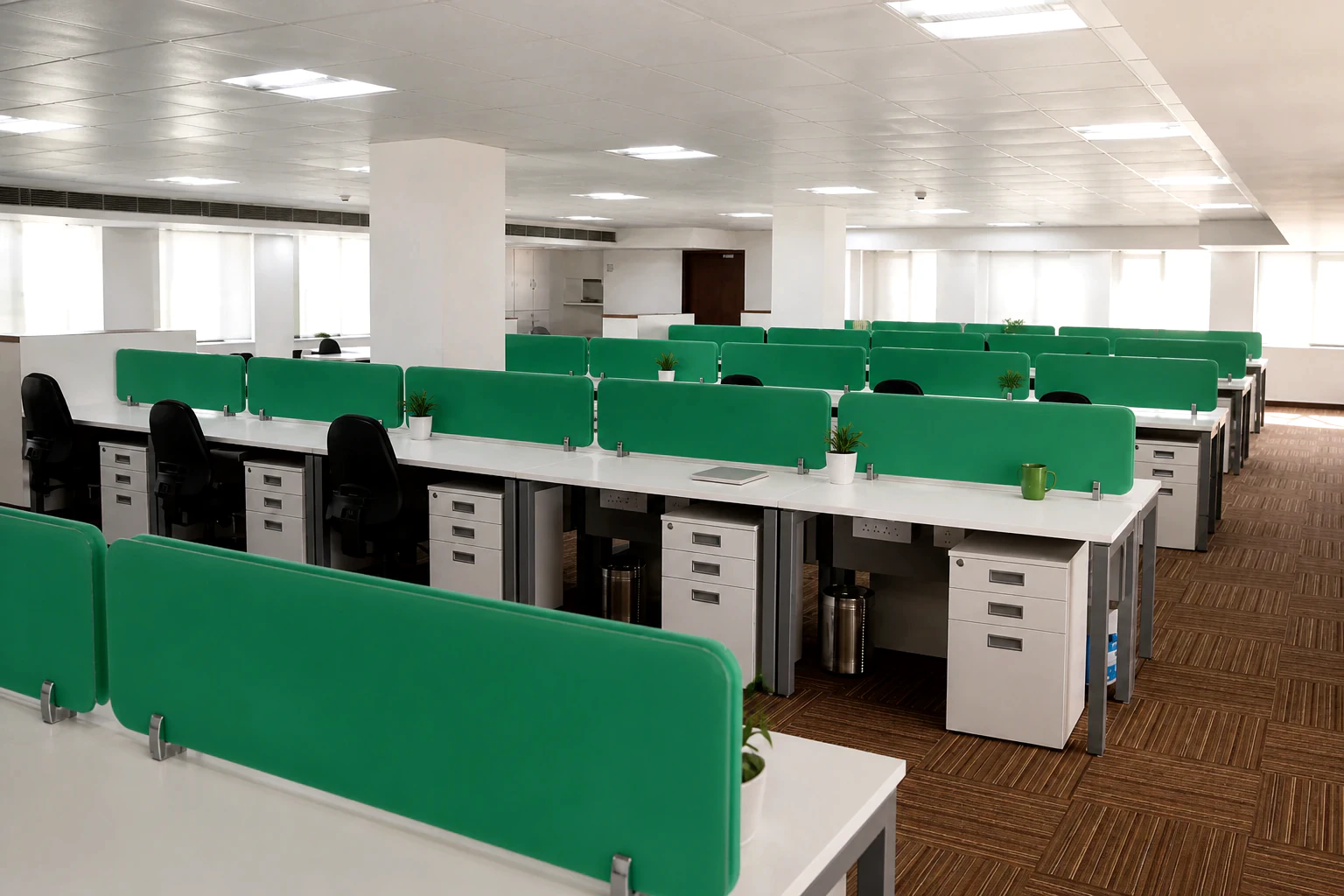
Long-life workspaces start with honest material choices — maintainable, repairable, and specified for real use.
What we prioritize
Products and layouts should stay usable longer so teams do not replace fit-outs prematurely.
We prefer materials and product structures that balance durability, maintenance, and lower environmental impact.
Better upfront planning reduces rework, mismatch, and waste during delivery and installation.
Approach
Material choice, maintainability, and planning discipline from spec to after-sales.
Eco-Score
Where score data is available, Eco-Score (1 to 10) is used as a directional planning signal alongside specifications and use-case fit.
Material composition, recycled-content signals, and durability-related fit where data is available.
Manufacturing and sourcing context captured in current product records or partner documentation.
Expected service life, maintenance practicality, and replacement risk in active use.
Next step
Browse the catalog, open Resource Desk, or request a planning call for material guidance on a live brief.